
Polymerization is the chemical process in which small molecules, known as monomers, join to form long polymer chains. Across most chain-growth polymerization systems — especially those used to produce high-volume industrial polymers like PP, PE, PVC, and PS — the reaction proceeds through four fundamental stages: initiation, propagation, chain transfer, and termination.
Each stage determines how quickly chains grow, how long they become, and how uniform the final material will be. These steps affect polymer quality, flow behavior, and logistics characteristics — including granulate size, bulk density, and how the polymer behaves in transport and unloading systems.
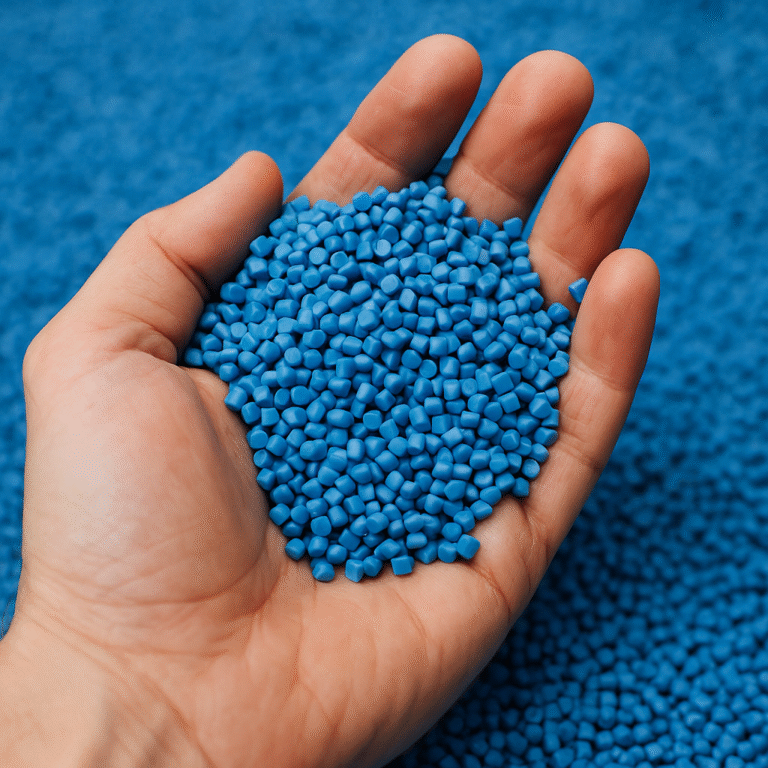
The polymerization process begins with initiation. In chain-growth polymerization, a chemical initiator (such as a peroxide or azo compound) decomposes under heat or light to form highly reactive radicals. These radicals attack the double bond of a monomer — such as ethylene or styrene — creating the first active center for chain formation.
This step is crucial because it determines how many polymer chains will begin growing. Too many initiator molecules may produce many short chains; too few may create fewer but very long chains. Reaction temperature, initiator concentration, and monomer purity all influence initiation efficiency.
Industrial polymerization reactors are designed to ensure consistent initiator activation to create stable, predictable chain formation. This stage sets the foundation for the polymer’s final molecular structure, mechanical performance, and flow properties.
During propagation, active polymer chains extend as monomer molecules continuously react with the growing chain end. This is the most productive stage of polymerization and determines the final polymer’s length, flexibility, density, and mechanical strength.
Propagation continues as long as monomers are available and the active chain remains reactive. Reaction rate depends on temperature, monomer concentration, and the chemical nature of both monomer and initiator. In industrial settings producing PP, PE, or PVC, controlling propagation conditions is essential to achieving consistent granulate size and melt behavior.
Propagation can be extremely fast, generating large amounts of heat — which is why temperature control is one of the core challenges in bulk polymerization processes.
Chain transfer is an important regulatory stage in polymerization. Instead of continuing to grow, the active chain end reacts with another molecule — such as a solvent, monomer, polymer, or additive. This reaction “transfers” the active site to a new molecule and effectively stops growth on the original chain.
Chain transfer helps control:
Industrial polymerization systems often use chain transfer agents to fine-tune material properties. Without controlled chain transfer, polymers might become too long, too viscous, or difficult to process — affecting granulate quality, dry bulk density, and unloading performance in logistics systems.
Termination occurs when the reactive chain ends are permanently deactivated. This typically happens through one of two mechanisms:
Termination defines the final molecular weight distribution, stability, and performance characteristics of the polymer. If termination occurs too early, the polymer may be weak or brittle; if too late, chains may become too long, raising viscosity and affecting processability.
In industrial reactors, termination is carefully managed through temperature control, monomer concentration, catalytic systems, and reaction time. Once the reaction is terminated, the polymer is cooled, stabilized, pelletized, and prepared for downstream logistics — often as dry bulk granulate ready for transport.
Understanding the four stages of polymerization is essential for both manufacturers and logistics providers. The conditions under which initiation, propagation, chain transfer, and termination occur directly influence the polymer’s:
These properties determine how safely and efficiently polymers can be transported, stored, and processed. For Nordic Bulkers, this knowledge ensures the correct selection of containers, liners, unloading equipment, and quality controls for polymers such as PP, PE, PET, ABS, and engineering plastics.
In manufacturing, understanding these stages supports better production control, consistency, and material performance. In logistics, it ensures smooth operations from origin to destination.