
Bulk transport refers to the movement of materials that are not packaged into individual units but instead shipped in full-volume form. These materials include polymers, minerals, powders, grains, fertilizers, and industrial solids that require continuous, large-scale flows to support manufacturing and processing. Instead of bags, drums, or pallets, bulk cargoes are handled in containers, silos, hoppers, or vessel holds.
This transport method is fundamental to industries such as chemicals, food processing, plastics, agriculture, and construction. By reducing packaging, bulk transport maximizes payload efficiency, improves loading speed, and minimizes waste. In intermodal operations, bulk transport combines road, rail, and sea to create stable, cost-efficient flows that align with sustainability targets.
For Nordic Bulkers, bulk transport is at the core of operations — focusing on safe, clean, and efficient movement of dry bulk materials, especially polymers and industrial powders. Specialist 30ft containers, advanced unloading systems, and high-quality liners ensure product integrity throughout the logistics chain.
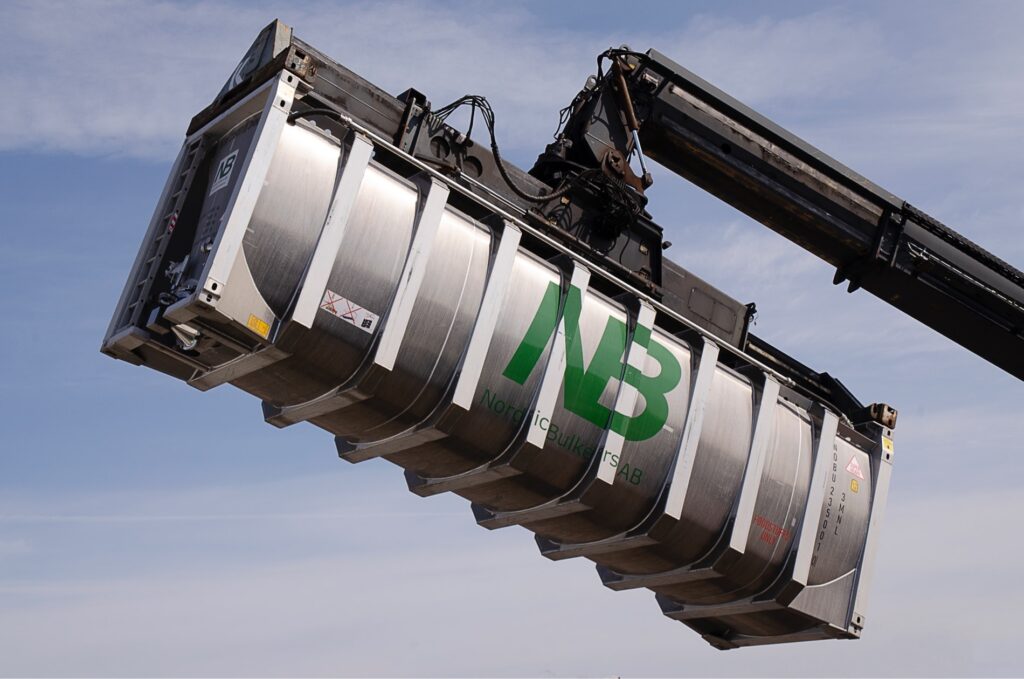
Bulk transport covers a broad spectrum of materials across multiple sectors. In the plastics industry, polymer granulates like PP, PE, PET, ABS, and PTT are among the most common bulk cargoes. Their uniform granulate structure, flow properties, and dry bulk density make them ideal for containerized bulk transport.
In the mineral sector, cement, gypsum, industrial sand, limestone, sulphate, and other powder-based solids move through pressurized containers or silo units designed to handle high-density cargoes. These materials require dust control, moisture protection, and robust unloading equipment.
Agriculture depends on bulk transport for grains, feed ingredients, fertilizers, and soil mixes, which move via silo systems or open-top containers based on density.
Food processing industries rely on bulk transport for sugar, flour, starches, cocoa powder, and grain derivatives, all handled in food-grade systems with strict hygiene controls.
The renewable sector uses bulk transport for wood chips, biomass, pellets, and alternative fuels.
This diversity reflects why bulk transport is essential for global production networks.
Bulk transport relies on specialized equipment designed for the safe movement and unloading of unpackaged materials. Dry bulk containers equipped with high-quality liners are used for polymers, powders, and food ingredients. These containers prevent contamination, protect product integrity, and support gravity or pneumatic unloading.
Pressurized or silo containers transport dense powders such as cement or gypsum, allowing direct unloading into silos through pneumatic systems. Open-top containers or walking-floor trailers handle low-density, high-volume materials like wood chips.
Bulk carriers and maritime systems support long-distance flows of minerals, grains, and industrial solids, while rail wagons provide high-efficiency, low-emission inland routes. Road transport connects terminals, production sites, and end-users through flexible, just-in-time delivery.
Nordic Bulkers integrates these modes through intermodal solutions — combining rail, sea, and road to optimize cost, reduce emissions, and maintain product stability.
Bulk transport involves significant operational and environmental responsibilities. Fine powders can create dust hazards; moisture-sensitive materials require sealed systems; and industrial minerals may pose chemical risks. To mitigate these challenges, logistics providers follow strict ISO standards, process controls, and specialized handling procedures.
Nordic Bulkers operates under ISO 9001, ISO 14001, and ISO 22000 certifications — ensuring quality, environmental protection, and food-grade safety. Pellet-loss prevention is central to polymer handling, supported by Operation Clean Sweep protocols that prevent polymer pellets from entering the environment.
Advanced unloading equipment minimizes manual handling, reduces dust exposure, and ensures safe container discharge. Intermodal routing dramatically lowers emissions, while digital tools such as emission reporting and Track & Trace support transparency and ESG compliance.
Bulk transport enables companies to move raw materials in the most efficient way possible. By eliminating unnecessary packaging and optimizing payload, businesses reduce cost per ton, improve handling speed, and minimize environmental impact.
Stable bulk flows support continuous production — critical for industries where downtime leads to major financial losses. For example, polymer manufacturers, food processors, and chemical companies rely on consistent bulk deliveries to maintain throughput and protect product quality.
Intermodal bulk transport reduces emissions and supports circular supply chains, aligning with global sustainability targets. Nordic Bulkers’ integrated solutions enhance reliability, efficiency, and control across all stages of transport, from origin to terminal to customer.