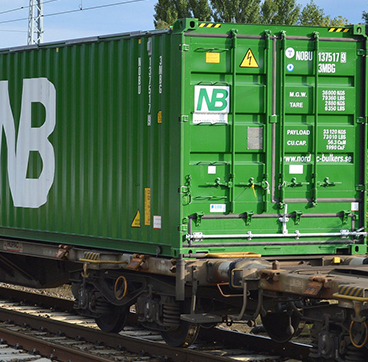
What Is Intermodal Bulk Transportation with Nordic Bulkers?

Intermodal bulk transportation moves unpackaged materials—such as polymers, powders, minerals, and food ingredients—through a seamless combination of road, rail, and short-sea logistics.

Understanding Intermodal Bulk Transportation

Intermodal bulk transportation refers to transporting bulk materials in sealed containers across multiple transport modes—road, rail, and sea—without repacking or exposure.

Definition and Core Function

Intermodal bulk transportation allows raw materials to move in a single, sealed unit from origin to destination through multiple transport modes. Containers remain closed the entire time, protecting materials from contamination, moisture, dust, and external handling.

This method is essential for industries that require high-volume, cost-efficient, and clean transport of unpackaged materials. It ensures:

  • Lower transport costs

  • Higher payload efficiency

  • Reduced environmental impact

  • Stronger supply chain stability

It is the preferred method for polymers, industrial powders, food ingredients, and mineral cargoes.

Materials Moved Through Intermodal Bulk Transportation

Intermodal bulk transportation supports polymers, industrial solids, agricultural products, food ingredients, minerals, and recycled materials.

Common Cargo Types

  • Polymers: PP, PE, PET, ABS, PBT

  • Industrial powders: lime, soda ash, gypsum, cement

  • Food ingredients: sugar, flour, starch, grain derivatives

  • Minerals: sand, limestone, sulphates, kaolin

  • Agricultural solids: fertilizers, grains, feed materials

  • Recycled materials: regrind plastics, RPP, RPE pellets

These materials benefit from sealed transport due to moisture sensitivity, contamination risk, or the need for dust

Intermodal Bulk Transportation by Nordic Bulkers

Nordic Bulkers delivers industry-leading intermodal bulk transportation using engineered 30ft containers, sealed liners, pneumatic unloading, and multimodal logistics networks.

A Clean, Efficient, and Scalable System

Nordic Bulkers’ intermodal bulk capabilities include:

  • 30ft dry bulk containers designed for payload stability

  • Food-grade and industrial liners ensuring contamination-free product protection

  • Pneumatic and gravity unloading systems

  • Intermodal routing across road, rail, and short-sea

  • Terminal services, such as silo storage, repacking, and quality inspection

  • Certified cleaning stations ensuring hygiene and safety

  • Track & Trace systems for full cargo visibility

  • CO₂ emissions reporting aligned with customer ESG goals

This enables safe, modern, and sustainable bulk transport across Europe.

How Intermodal Bulk Transportation Works

Bulk materials are loaded into sealed containers, moved across multiple transport modes, and unloaded directly into silos or production systems.

Step-by-Step Operational Flow

  1. Loading
    • Materials are loaded into lined containers via pneumatic or gravity systems.
  2. Road transport
    • The container is moved from production site to a rail or port terminal.
  3. Rail transport
    • Long-distance movement with a significantly lower carbon footprint.
  4. Short-sea shipping
    • Coastal or regional vessel transport when required.
  5. Terminal handling
    • Optional silo storage, decanting, repacking, or moisture testing.
  6. Final unloading
    • Pneumatic or gravity discharge into customer silos or production systems.


Throughout the journey, the cargo remains sealed, ensuring consistent quality.

Safety, Quality, and Sustainability in Intermodal Bulk Transportation

Intermodal bulk systems require strict ISO compliance, dust control, moisture protection, and environmental monitoring.

Nordic Bulkers’ Commitment

Nordic Bulkers follows:

  • ISO 9001 – Quality Management

  • ISO 14001 – Environmental Management

  • ISO 22000 – Food Safety (for food-grade materials)

  • Operation Clean Sweep for polymer pellet containment

  • Dust-controlled unloading technology

  • Moisture-protected liner systems

  • Rail-first strategy for reduced emissions

  • Digital CO₂ and ESG reporting

These standards ensure safe, clean, and sustainable transport across all intermodal modes.

Why Intermodal Bulk Transportation Matters

Intermodal bulk transportation improves efficiency, reduces handling costs, enhances supply chain reliability, and supports sustainability goals.

Strategic Benefits

  • Zero packaging waste

  • Higher payload utilization

  • Cleaner and safer material handling

  • Faster loading and unloading

  • Seamless intermodal transitions

  • Reduced CO₂ emissions

  • More stable supply chain flows

With Nordic Bulkers, industries gain a future-ready partner for clean, efficient, and reliable bulk transportation across Europe.